Adopting AI Without Adopting Tech Debt (April 2026)
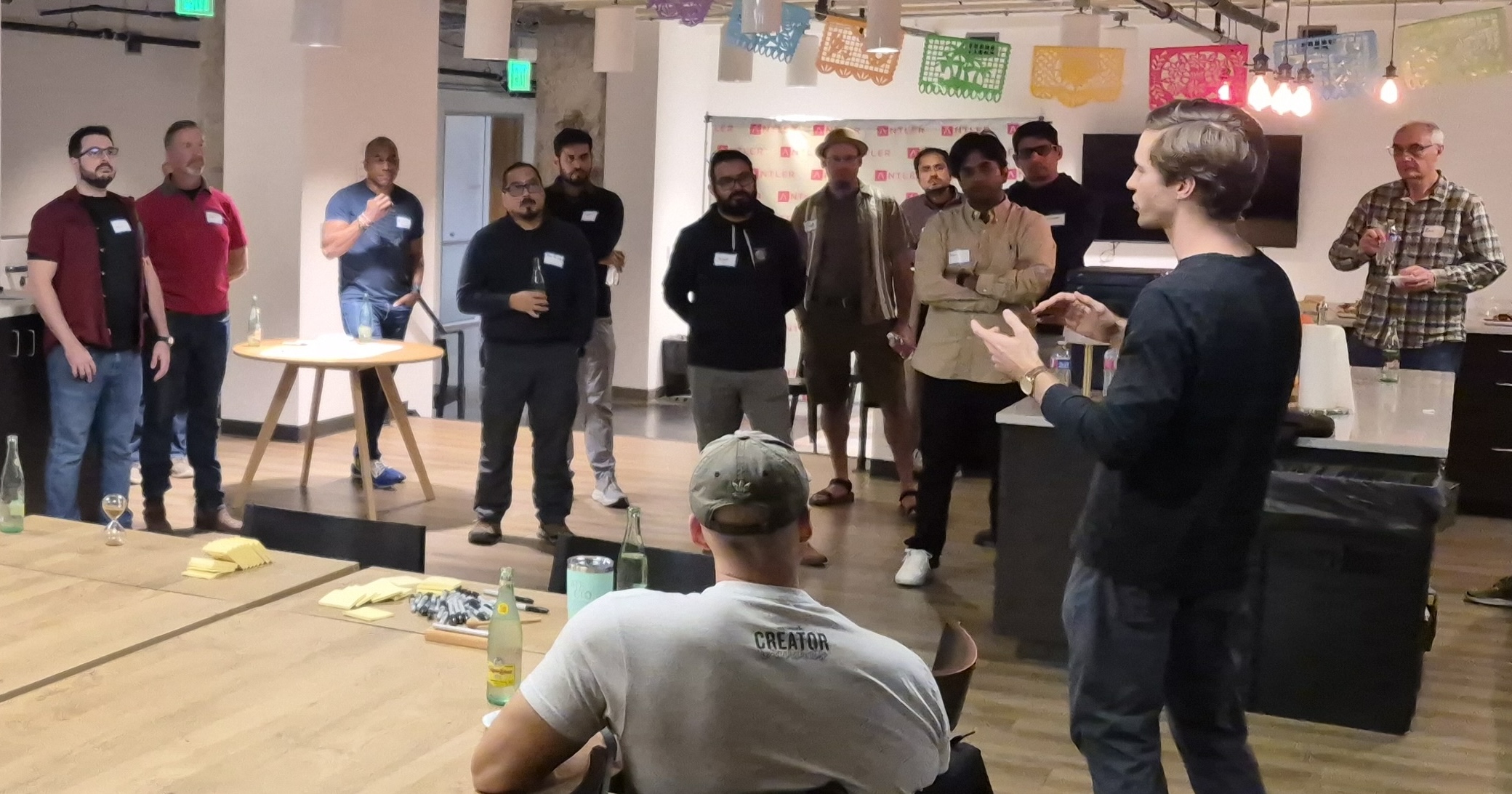
Austin CTO Club Talk Jan 2026
This is the blog adaptation of a talk I gave at the Austin CTO Club in January 2026.
TL;DR: Minimize AI-era tech debt through context window management (Skills, markdown, monorepos), smaller teams with clear system boundaries, and open-source tooling for MCP Apps, ChatGPT Apps, and Claude Connectors.
Hi, I’m Abe. I recently sold my company, Trigo, where I was CTO building AI in property tech. I’ve since been building sunpeak, the open-source MCP App framework for building and testing MCP Apps, ChatGPT Apps, and Claude Connectors.
Software development looks very different today, and I no longer think about tech debt the same way. I group my approach to minimizing AI-era tech debt into three areas: tech, people, and how we ship AI-native software.
Tech
Coding Agents
Ground zero for AI tech discussions. Leading coding agents include Claude Code, OpenAI Codex, Cursor, and Gemini Code Assist. Claude Code now offers up to 1M tokens of context on Opus 4.6, which means entire codebases fit in a single conversation.
Unlike humans, agents don’t struggle with deadlines or extra work. The real driver for tech debt in an agentic world is misalignment. Keeping all developer agents rowing in the right direction is key, and the way to do that is through context window management:
- Context windows range from 200k tokens to 1M tokens depending on the tool, roughly 500 to 2,500 pages of text
- We need to fit everything about our company, policies, vision, market, product, organization, team, project, personal preference, feature specification, and current conversation in this window
- We can host markdown from each relevant team and level of the organization hierarchy to keep all agents aligned over time
- Agent Skills are one way to do this, implemented as directories with
SKILLS.mdfiles - IT maintains company policies and SOC instructions, division leaders maintain architecture and strategy docs, team leads maintain project-level context
- Agent Skills are one way to do this, implemented as directories with
- Monorepos remain the simplest way to keep context unified across related systems
Ancillary Tech
A 10x increase in coding speed requires a 10x increase in everything around it:
- Code review: CodeRabbit, GitHub Copilot code review
- Testing: coding agents do this well, and specialized frameworks matter for MCP Apps where you need to replicate host runtimes like ChatGPT and Claude (sunpeak’s testing framework handles this)
- CI/CD and infra: anything defined as code, agents handle well
- Security: Semgrep, Snyk, Dependabot with cooldowns
People
People are far more productive, but our human context windows haven’t changed in 200,000 years. To stay on the same page, teams need to be smaller.
- Smaller teams with tighter coordination
- Larger ownership per engineer
With empowered individuals and small teams, clear boundaries around systems matter more than ever to maximize autonomy and speed. If Amazon made the switch to a Service Oriented Architecture at 7,000 employees, that number is much lower today.
Additional tactics to keep people coordinated with AI:
- Agentic access to ticketing and SDLC systems via MCP (Linear, Jira, and GitHub all have MCP servers now)
- Dedicated early adopter(s) who champion tooling and share patterns with the team
- Clear product processes around specs, reviews, and launches
- Shared context documentation that both humans and agents reference
Shipping AI-Native Software
The proliferation of agents has come with new types of software that agents can use. Beyond Skills mentioned above, we builders are being tasked with building MCP servers, MCP Apps, ChatGPT Apps, and Claude Connectors.
MCP
Model Context Protocol (MCP) lets agents interact with our systems. If Skills are the static websites of the agent internet, MCP servers are the dynamic websites.
MCP moved from Anthropic to the Linux Foundation’s Agentic AI Foundation (AAIF) in late 2025, with platinum members including AWS, Anthropic, Google, Microsoft, and OpenAI. The 2026 roadmap focuses on transport scalability (stateless Streamable HTTP), enterprise readiness (audit trails, SSO-integrated auth, gateway behavior), and agent communication. There are now over 10,000 published MCP servers.
MCP will continue to change, but the rate of change is slowing as it matures under multi-stakeholder governance. Using open-source tooling to abstract the protocol layer remains the best way to reduce the tech debt surface area.
MCP Apps (ChatGPT Apps and Claude Connectors)
MCP Apps let anyone embed interactive, visual apps in AI conversations. ChatGPT Apps reach ChatGPT’s 800M+ users, while Claude Connectors bring data access and interactive UI to Claude across desktop, web, and mobile.
MCP Apps became an official MCP extension in January 2026. They’re now supported by ChatGPT, Claude, VS Code Copilot, Goose, and other MCP-compatible hosts. OpenAI launched the ChatGPT App Directory for third-party developers, and Anthropic expanded Claude Connectors with enterprise integrations for Google Workspace, Microsoft 365, and more.
Because these protocols sit on top of MCP and include host-specific extensions, they will keep evolving. A framework that handles the host differences and stays current with protocol changes saves real maintenance time. sunpeak does this: you write one MCP App codebase and it works across ChatGPT, Claude, and other hosts.
Testing MCP Apps Without Burning Credits
One of the biggest sources of friction (and cost) when building MCP Apps is the manual testing loop. Every code change means re-deploying, refreshing the host, and waiting for tool calls, often on a paid account burning API credits.
The sunpeak Inspector replicates the ChatGPT and Claude runtimes locally, so you can develop and test without any host account. The sunpeak testing framework adds automated testing on top: unit tests, E2E tests with Playwright, visual regression tests, and multi-model LLM evals, all running locally and in CI/CD. You can get started with the quickstart guide.
Get Started
npx sunpeak new
Further Reading
- What is an MCP App? Architecture, hosts, and how to build one
- How to choose an MCP App framework in 2026
- Building one MCP App for ChatGPT and Claude
- Complete guide to testing ChatGPT Apps and MCP Apps
- What are Claude Connectors? Data access, auth, and setup
- MCP App framework overview
- Claude Connector framework overview
- MCP App testing framework
Frequently Asked Questions
What causes tech debt when using AI coding agents?
AI agents don't struggle with deadlines or extra work. The primary driver of tech debt in agentic development is misalignment, where multiple agents work with inconsistent context, causing architectural drift and conflicting implementations. Managing context windows with structured markdown, Agent Skills, and monorepos keeps agents aligned.
How do you manage context windows for AI coding agents?
Context windows range from 200k tokens in most tools to 1M tokens in Claude Code Opus 4.6. Use markdown files organized by team and hierarchy to keep context consistent across agents. Implement Agent Skills via SKILLS.md files in directories, and use monorepos so related code stays unified.
How should team structure change with AI coding productivity?
With 10x coding speed, teams should be smaller with tighter coordination and larger ownership per engineer. Clear system boundaries maximize autonomy and support decentralization. Service-oriented architectures become practical at much smaller company sizes than before.
What is MCP and why does it matter for AI adoption?
MCP (Model Context Protocol) lets AI agents interact with your systems. Think of Skills as static websites and MCP servers as the dynamic websites of the agent internet. MCP moved to the Linux Foundation's Agentic AI Foundation (AAIF) in late 2025, with backing from AWS, Anthropic, Google, Microsoft, and OpenAI. The 2026 roadmap focuses on transport scalability, enterprise readiness, and agent communication.
What are MCP Apps, ChatGPT Apps, and Claude Connectors?
MCP Apps are interactive UIs built on MCP that render inside AI hosts. ChatGPT Apps are MCP Apps running in ChatGPT, reaching 800M+ users. Claude Connectors are MCP Apps running in Claude. A single MCP App codebase works across both hosts. The sunpeak framework handles host-specific protocol differences so you write once and deploy everywhere.
How do you minimize tech debt with fast-changing AI protocols?
Adopt open-source software to offload protocol changes. For MCP Apps, ChatGPT Apps, and Claude Connectors, the sunpeak framework abstracts host differences and evolves with the protocol. For MCP servers, open-source gateways and utility libraries reduce the surface area you maintain directly.
What AI coding tools reduce tech debt in 2026?
Leading coding agents include Claude Code, OpenAI Codex, Cursor, Gemini Code Assist, and OpenCode. Claude Code offers up to 1M token context for large codebase analysis. Complement with code review tools (CodeRabbit), testing frameworks (sunpeak for MCP Apps, Playwright for E2E), and security scanners (Semgrep, Snyk, Dependabot).
How do you test MCP Apps and ChatGPT Apps without burning host credits?
The sunpeak Inspector replicates the ChatGPT and Claude runtimes locally, so you can develop and test without paid accounts or API credits. sunpeak also supports automated testing in CI/CD with unit tests, E2E tests, visual regression tests, and multi-model LLM evals, all running against the local Inspector.